Posts Tagged ‘asbestos’

Asbestos Industry Spends Millions To Keep Sales Going

Saturday, July 24th, 2010

asbestos worker in china

A recent news report,  Dangers In the Dust: Inside the Global Asbestos Trade, by the BBC and the International Coalition of Investigative Journalists reveals that the asbestos industry has spent over $100 million in recent years to lobby and promote the continued use of asbestos  in developing nations around the world.

Part of the asbestos industry’s effort has included using industry-funded researchers to place into the scientific literature hundreds of articles claiming the chrysotile asbestos can be used safely. Their central position is that chrysotile, or white abestsos, is the only kind sold today and they claim it is orders of magnitude safer than brown or blue asbestos.

The industry’s position flies in the face of world scientific consensus from such groups as the World Health Organization, American Public Health Organization, the International Commission on Occupational Health, the EPA and 52 nations around the world that have banned the use of all forms of asbestos including chrysotile.

Perhaps nowhere is the industry as strong as in India, the world’s second-largest consumer of asbestos after China. There are more than 400 asbestos cement factories in India and the asbestos market is growing at a rate of about 30% annually. Tragically, if developing nations don’t begin to ban the use of asbestos, and nations such as Canada and Russia continue to export asbestos, the death toll of asbestos victims globally will continue throughout the 21st century. Already, at current consumption rates, China is expected to have 10,000 to 15,000 asbestos-related deaths per year by 2035.  This after the United States and Europe continue to suffer thousands of asbestos related deaths a year from now decades old asbestos use.  

Help stop history from repeating itself. Contribute the International Ban Asbestos Secretariat or help urge Canada to ban the export of asbestos to already troubled nations around the world.

New Report Shows Asbestos Still a Global Business

Wednesday, July 21st, 2010

Indian Workers Protest Asbestos

Despite proven links to cancer, a ban in the European Union and restrictions in the United States, industry lobbyists have ensured that asbestos is still very much in demand in the developing world, a report out today shows.

An investigation conducted by the International Consortium of Investigative Journalists and the BBC, Dangers In the Dust: Inside the Global Asbestos Trade ,  found that the asbestos industry has ignored waves of asbestos-related disease around the world that have led to bans or restrictions in 52 countries, and continues to ply the mineral in developing nations.

More than half of the two million metric tons of asbestos that were mined worldwide in 2009 was exported to developing countries India and Mexico, where demand is high for cheap building materials.

Most of the asbestos sold in those countries is used in cement for corrugated roofing, in water pipes and for home construction.

The asbestos industry’s growth has been fueled by an marketing campaign of international industry groups and led by the Canadian government backed Chrysotile Institute.

Asbestos fibers when inhaled can cause a variety of diseases in humans, including lung cancer and mesothelioma, a cancer of the lining of the lung.   The continued export of asbestos to developing countries will tragically create a new generation of asbestos victims far into the 21st century.

Canadian Cancer Association Fights Against Asbestos Mining

Tuesday, July 13th, 2010

The Canadian Cancer Society  is standing up with other public health groups   and international scientists to call for an end to Canadian asbestos mining. The Cancer Society stepped in to urge Premier Jean Charest to deny a $58 million loan to keep the Asbestos, Quebec mine, currently in bankruptcy, operating for 25 more years.  Asbestos, a known carcinogen, is blamed for causing mesothelioma, lung cancer, asbestosis and other respiratory illnesses which continue to develop around the world including Canada and the US.  

The action was followed by the town of Asbestos cancelling their participation in one of the Canadian Cancer Society’s premier fundraising events, Relay for Life.  The mayor of Asbestos said, “We want to work with our partners and not with our detractors,” and believes that asbestos is safe when properly handled. 

Canada is a major exporter of asbestos to developing nations such as India, Mexico and Brazil where asbestos is still used in new construction materials.  Countless workers will continue to develop asbestos disease in these countries for decades to come as a result of Canada’s actions.

Even small amounts of asbestos when inhaled can cause mesothelioma, lung cancer and other asbestos related diseases. 

The Cancer Society states that their concern is the health of the public and “we are concerned about the fact that asbestos is a fiber that is killing people.”   The Canadian Cancer Society vows to continue to apply pressure to politicians, and to put Canada’s public health first.   Other Canadian organizations have joined the cause, including the Canadian Public Health Association and the Canadian Medical Association.

India’s 21st Century Asbestos Epidemic

Friday, February 19th, 2010

India’s continuing reliance on asbestos construction products and its lack of environmental regulations will result in an explosion of malignant asbestos-related diseases including mesothelioma and lung cancer, warn experts in this month’s issue of The Lancet, a leading medical journal.  

Asbestos  is a natural mineral which causes a variety of cancers including mesothelioma and lung cancer.  “Sadly, this is a human tragedy which is entirely preventable,” says mesothelioma lawyer Ben DuBose of Dallas, Texas.   “The government of India knows that asbestos is a deadly substance – a fact known by the world’s medical and scientific community for decades.  What makes the situation in India deplorable is that the government of India would knowingly unleash this epidemic on its own citizens in 2010” says DuBose.  

Asbestos disease, generally thought to be a problem of the past, will continue to be a human tragedy of the 21st Century thanks  not only to weak environmental policies in the developing world but also because of the gross indifference of Canada – currently the world’s largest exporter of chrysotile asbestos.   

The government owned asbestos mine in Quebec Canada exported over $90 million dollars worth of Chrysotile asbestos in 2009 to developing countries such as India and Mexico.   The Chrysotile Institute, an influential organization funded by the Canadian government, lobbies internationally on behalf of chrysotile as a “safe” asbestos fiber.  Indeed, Canada has been instrumental in trying to stop international agreements to abolish exportation of the fiber. 

In the United States, the EPA long ago declared that all fiber types, including chrysotile, cause cancer in humans.  Asbestos, including chrysotile, was the first substance regulated by OSHA in 1972.  Moreover, the World Health Organization has declared that chrysotile and all asbestos fiber types cause cancer in humans even at low levels of exposure.  This global consensus that asbestos is a lethal substance has prompted more than 40 countries – including all member states of the European Union – to ban chrysotile asbestos. 

Tragically, the governments of many developing countries have not enacted measures to protect their citizens from the hazards of asbestos.   In India, for example, there’s a very low awareness of the health hazards of asbestos.  As one expert, Arthur Frank of Drexel University, told The Lancet, “We can expect a lot more death and disease, that’s no secret.  There’s no champion for the working person, or for the elimination or reduction in the use of asbestos, that I can see in the central Indian Government.”

Canada Continues to Export Asbestos

Tuesday, February 16th, 2010

In spite of the now well-known health hazards of asbestos, including mesothelioma and lung cancer, the Canadian government continues to mine asbestos because of the economic incentive of selling the deadly fiber to developing countries. Canada is the second-largest exporter of the mineral after Russia. The world’s largest open pit asbestos mine continues to be operated to this day in the Canadian province of Quebec.
What’s more, unlike countries in the European Union, as well as Japan, Australia and Saudi Arabia, Canada has not banned asbestos. Rather, the Canadian federal government actively promotes its use globally. In 2008 Canadian asbestos exports exceeded $92 million in sales – all to developing countries such as Brazil, Mexico, and India.
The World Health Organization has labeled all types of asbestos, including chrysotile, as carcinogenic. It is banned in many developed countries, including New Zealand, Australia and all European Union countries.
The Canadian government has actively fought to keep asbestos off a U.N.-sponsored list of dangerous substances. If included on the list, called the Rotterdam Convention, any country looking to import asbestos would be informed of all the potential risks and would have to agree in advance to accept any shipments.
Julia Langer, director of the global threats program at the World Wildlife Fund in Canada, one of the groups pressuring the United Nations to restrict the export of asbestos, said the move was despicable. Including asbestos on the list “could have saved a lot of lives,” she said.
In the most recent update to the Rotterdam Convention’s Prior Informed Consent list in October 2008, chrysotile was again left off after India, Pakistan, Vietnam and the Philippines objected. To be added to the list, consensus must be reached.
Quebec’s asbestos industry has moved up a notch with Premier Jean Charest’s trade mission to India, one of the biggest importers of Canadian asbestos.
Over 100 scientists from 28 countries have recently authored a joint letter to Quebec Premier Jean Charest calling for a ban on Quebec’s export of asbestos to the developing world
The industrial and medical communities have known for decades that asbestos causes lung cancer and mesothelioma in humans. The fact the Canadian government continues to mine and export this deadly substance to developing countries is appalling. New generations of unprotected workers in developing countries will develop cancer as a result of Canada’s actions. To learn more and to help stop the Canadian asbestos mines see www.bacanada.org

DuBose Law Firm and Waste Wise: Good News for Environment

Monday, February 1st, 2010


DuBose Law Firm tackles environmental issues everyday by fighting for asbestos personal injury victims and public interest issues related to asbestos.  Since 2008 DuBose Law Firm has also worked to protect the environment as an ABA-EPA Climate Challenge partner.  


A fundamental part DuBose Law Firm’s commitment to the environment includes participation in U.S. Environmental Protection Agency’s (EPA) innovative WasteWise program, the country’s first national voluntary solid waste reduction program.  WasteWise encourages organizations to reduce municipal solid waste through waste prevention, recycling, and buying or manufacturing recycled products. WasteWise partners have saved thousands, even millions of dollars in purchasing costs and waste disposal fees by reducing, reusing, and recycling solid waste materials.


As a WasteWise member, we are required to establish three new waste prevention activities, expand or improve our current recycling efforts, and purchase and/or manufacture additional products with recycled content.  The programs we initiate as part of our participation in WasteWise will build on the successes of our established waste prevention and recycling efforts.  A major thrust of WasteWise is waste prevention—actions that minimize or eliminate the generation of waste before it is created—with the goal of decreasing the amount of material that must be recycled or thrown away.


According to founding partner, Ben DuBose, “unfortunately, lawyers are tree killers.  At least one nation- wide study has shown that without a waste management plan, a single attorney can consume up to half a ton of paper per year.”  The life-cycle of a ton of paper, from production to landfill disposal results in the generation of about 11 tons of carbon dioxide (CO2) equivalent greenhouse gas emissions. “Participation in WasteWise demonstrates DuBose Law Firm’s commitment to preserve natural resources and protect the environment,” says DuBose.


The WasteWise program has a broad and varied membership that reflects the makeup of corporate America.  For more information, go on-line at www.epa.gov/osw/partnerships/wastewise/about.htm


Earth Day and Asbestos

Wednesday, April 22nd, 2009

Earth Day, celebrated April 22nd, is a day designed to inspire awareness and appreciation for the Earth’s environment. U.S. Senator Gaylord Nelson helped establish the first Earth Day as an environmental teach-in in 1970 in response to growing environmental concerns of the time. 

In the decades following World War II, a vast array of chemicals and other toxic substances were introduced into the manufacturing and construction sectors on an unprecedented scale.  Many of the health risks associated with these toxins remained unknown to the general public and often hidden from workers.   However, by the late 1960s, some visible signs of pollution began to manifest themselves: polluted rivers, streams, and unclean air began to alarm average Americans. 

A groundswell of concern about the environment led to the first observance of  Earth Day on April 22, 1970.    The goal of the demonstrators was to establish a healthy, sustainable environment.

Twenty million demonstrators and thousands of schools and local communities participated in that first event.  Senator Nelson directly credited the first Earth Day with persuading U.S. politicians that environmental legislation had a substantial, lasting constituency. Many important laws were passed by Congress in the wake of the 1970 Earth Day, including the Clean Air Act, the creation of the United States Environmental Protection Agency (EPA) and the creation of the Occupational Safety and Health Administration (OSHA). 

One of the first toxic substances to be regulated by both OSHA and the EPA was asbestos.  While a natural mineral, asbestos is also a deadly substance which gained widespread use in the 20th Century as an ingredient in thousands of different construction products and everyday household items. Most people working with the “magic mineral”, as asbestos was commonly called, had no idea of its potential danger. Many companies and manufacturers did know, however, and failed to inform and protect workers, their families and the public. 

With the creation of the EPA and OSHA, great progress was made to protect workers and the  public from the hazards of asbestos.  However, because asbestos was such a common construction material it still poses a very real health hazard even in 2009 in existing buildings, homes and sadly as recent studies have shown – even in modern children’s toys and other household items which have still been sold in recent years.   The attacks of 9/11 and the destruction of the twin towers also unleashed massive amounts of asbestos dust which showered down from the buildings onto rescue workers and residents of Manhattan.  The full magnitude of the harm caused by those attacks may not be known for decades. 

The cancers caused by asbestos, including mesothelioma and lung cancer, may not develop until 15 to 50 years after an  individual is exposed to asbestos.   Therefore, even with the protections established by OSHA and the EPA,  Americans will continue to develop asbestos related diseases for decades.  An estimated 2,500 to 3000 Americans develop mesothelioma every year.

Despite the creation of the EPA, OSHA and other state and federal asbestos regulations, you may be shocked to learn that asbestos has yet to be banned in the United States.  Congress can and should pass legislation to ban asbestos-containing products and fund educational and research programs. 

So, on this Earth Day, take a moment to continue the march towards a safer environment and to help fellow Americans suffering from asbestos disease.  Ways you can help right now:

      Make a donation to the International Mesothelioma Program, www.impmeso.org – a research group at Brigham & Women’s in Boston that is on the forefront of research to find a cure for mesothelioma.

      Help asbestos victims and raise awareness of still existing asbestos health concerns by supporting the Asbestos Disease Awareness Organization at www.asbestosdiseaseawareness.org

      Let your Congressman and legislators know you support an outright ban on asbestos-containing products in the United States.  See www.banasbestos.us for ways you can help. 

Tremendous strides have been made over the last four decades to improve our air, water and workplace hazards, but much work remains to be done. Challenge yourself to get involved. 

DuBose Law Firm, PLLC represents mesothelioma victims that have been exposed to asbestos.  Dallas mesothelioma lawyer, Ben DuBose,  has also fought for a better environment by opposing recent attempts to weaken asbestos abatement standards.   


.


Asbestos Contamination at Montana Quarry Possible

Tuesday, March 17th, 2009

A cement company operation near Helena, Montana is investigating possible asbestos contamination at its quarry and the company has told employees they should not report for work until instructed to do so.

Tremolite, an asbestos contaminant, may be found in portions of the cement company’s quarry. Test results from samples taken by the company are still pending.  All forms of asbestos, including tremolite, cause a variety of cancers including mesothelioma and lung cancer. 

Vermiculite mined near the northwestern Montana town of Libby also contained tremolite.  A federal trial is under way in Missoula on allegations that mine operator W.R. Grace & Co. and five former company officials knowingly allowed human exposure to the asbestos, which was dispersed beyond the mine site to points all over the United States. The W.R. Grace mine closed in 1990.

For more information on the Helena, Montana quarry, see the following link:  www.forbes.com/feeds/ap/2009/03/16/ap6173604.html

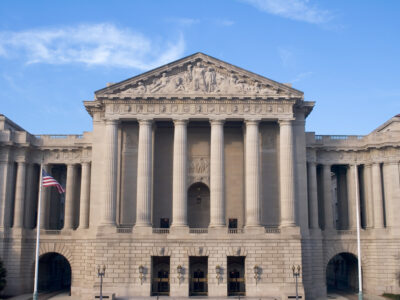
Asbestos found at the Smithsonian

Monday, March 16th, 2009

Washington D.C. -  In 2008,  the National Air and Space Museum gathered a group of workers for a safety briefing concerning asbestos safety.  During that meeting, the museum’s safety coordinator said something that Richard Pullman thought at first he’d misheard: There was asbestos in the museum walls.

Asbestos is a naturally occurring mineral which was widely used in construction products during the 20th century.  Airborne asbestos can cause a wide range of diseases including mesothelioma, a cancer of the lining of the lung, as well as lung cancer and asbestosis.

Pullman, a 53-year-old lighting specialist, had worked in the building for 27 years, frequently cutting into interior walls to install and update artifacts at one of the world’s most visited museums.

Within weeks, Pullman filed a  federal workplace safety complaint.  He also experienced shortness of breath which lead him to see a lung doctor, who diagnosed asbestosis, a lung disease linked to breathing asbestos fibers.

Pullman and the museum are now engaged in a dispute about the danger posed by asbestos dust in the building. Smithsonian Institution officials acknowledge the presence of asbestos in some areas of the museum.  However, the museum has removed the substance from several areas of the building and it contends all dust sampling established levels of airborne asbestos below permissible levels.

The Smithsonian Air and Space Museum was built in the early 1970s.  “During the early and mid 1970s, drywall joint compounds and texture products still contained asbestos as an ingredient” states Dallas mesothelioma lawyer Ben DuBose.  “Not until 1977 or 1978 did most joint compound manufacturers eliminate asbestos from this very common residential and commercial construction product” says DuBose.

For more information on Pullman’s claims against the Smithsonian see: www.washingtonpost.com/wp-dyn/content/article/2009/14/AR2009031402177.html

Asbestos Abatement of National Guard Building

Friday, March 13th, 2009

A National Guard building located in Woonsocket, Rhode Island has been cited for demolition and will soon be rid of asbestos-containing materials. The National Guard is in the process of accepting bids for both the removal of the dangerous materials as well as the demolition of the building.

Asbestos-containing products were commonly used in the construction of residential, commercial and industrial buildings and facilities as recently as the late 1970’s. Despite usage regulations and laws governing use of asbestos in the work-place, this toxic substance is still not banned in the United States. Asbestos fibers can cause an incurable and fatal cancer of the lining of the lung known as malignant mesothelioma as well as lung cancer and asbestosis.

Dallas mesothelioma lawyer, Ben DuBose, has worked with the public interest law firm, Trial Lawyers for Public Justice, in recent years to ensure that the EPA does not lower the current abatement protocols that govern the demolition of buildings such as the National Guard building in Woonsocket.

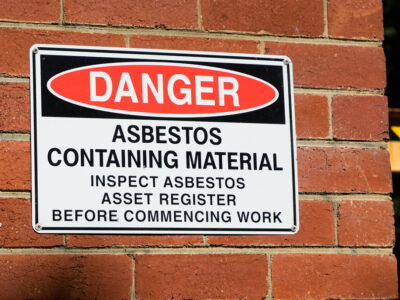
According to officials, the building is located in close proximity to an area school, but the National Guard has stated that signs are posted acknowledging the presence of asbestos and that the building is secure.

Officials have not yet set a date for when the asbestos abatement and subsequent demolition are expected to take place.