Ground Zero Toxic Dust Settlement

March 12th, 2010

After years of legal battles between the city of New York, the construction companies and more than 10,000 ground zero rescue and recovery workers, the parties have agreed to a settlement that could pay up to $657.5 million to responders sickened by high levels of toxic dust created by the collapse of the World Trade Center. 

Many of these workers became ill after inhaling toxic-contaminated dust while working at the site and are seeking damages for various ailments, including cancer.  The toxic dusts present in the ground zero rubble included: asbestos, heavy metals and various chemicals such as benzene from burning jet fuel, dioxins and PCBs.   Exposure to such toxins can result in numerous respiratory diseases as well as cancer such as mesothelioma and other reproductive and neurological disorders.

The settlement was announced Thursday evening by the WTC Captive Insurance Co., a special entity established to indemnify the city and its contractors against potential legal action as they moved to clean up the site after the Sept. 11, 2001 terror attacks. 

The settlement must still be approved by approved by a judge and the workers themselves and would make the city and other companies represented by the insurer liable for a minimum of $575 million with up to $657.5 million available if 100 percent of the claimants agree to the settlement.  At least 95 percent of the claimants must agree to the plan for the settlement to go into effect.

Most of the existing claimants complain of asthma and other respiratory illnesses as a result of their work at ground zero in the months following the Sept. 11th attacks.  However, some of the cases that fall under the settlement involve plaintiffs who are not ill now but fear they will develop illnesses like cancer which can take years to manifest themselves – a period of time known as the latency period.

Dallas mesothelioma attorney Ben DuBose, who also represented a victim of terror attacks before the September 11th Victims Compensation Fund, says that “unfortunately, because of the long latency period for some cancers, it will be decades before we know the full impact on human health from the destruction of the twin towers.” The proposed settlement establishes an insurance policy of over $23 million to cover such future claims.

Merlin Olsen Passes Away from Mesothelioma

March 11th, 2010

Merlin Olsen, who went from being a member of the Los Angeles Rams’ legendary “Fearsome Foursome” defensive line in the 1960s, a member of the NFL Hall of Fame and to playing Jonathan Garvey on TV’s Little House on the Prairie as well as the lead role in TV’s Father Murphy in the ‘70s and ‘80s, has died. 

ABC 4 News in Salt Lake City, Utah reports that Olsen, 69, succumbed to mesothelioma last night.   Mesothelioma is a cancer of the lining of the lung caused by even low levels of exposure to asbestos. 

Also from Utah, the Cache Valley Daily writes that Olsen, “perhaps the most accomplished athlete to ever come out of Cache Valley …was diagnosed with mesothelioma in 2009 and had been undergoing several rounds of chemotherapy.”

Earlier this year, Olsen brought legal claims in Los Angeles based on his mesothelioma diagnosis.  In that suit, Olsen stated he was exposed to asbestos containing products while working as a laborer and construction worker during summers and after school from the time he was 10 through college. 

Olsen was diagnosed with this dreadful cancer  in July of last year.  Tragically, Mr. Olsen joins a growing list of celebrities, as well as thousands of Americans, that have died from malignant mesothelioma including Steve McQueen, Hamilton Jordan, Admiral Elmo Zumwalt, and Warren Zevon.

Resolution to Designate Asbestos Awareness Week

March 10th, 2010

Montana Senator Max Baucus and several members of the U.S. House are calling for an official “Asbestos Awareness Week.”   The Senator recently introduced a resolution that would designate the first week in April “Asbestos Awareness Week”.  A similar resolution has also been introduced in the U.S. House by Representative Steve Cohen (D-TN) and several cosponsors.   The resolution declares the first week of April as “National Asbestos Awareness Week” and seeks to “raise public awareness about the prevalence of asbestos-related diseases and dangers of asbestos exposure.”   Additional cosponsors and key supporters include: Rep. Raul Grijalva (D-AZ), Rep. Lois Capps (D-CA), Rep. Gwen Moore (D-WI) and Rep. Betty Sutton (D-OH).

“There are too many good folks still suffering from asbestos-related disease and contamination in Montana and across the United States,” said Baucus.  “Asbestos Awareness Week provides a perfect opportunity to raise awareness about the dangers of asbestos and the need to keep fighting for the victims of asbestos-related disease.”

Virginia Senate Votes Down Asbestos Bill

March 9th, 2010

A proposed bill designed to protect a specific Fortune 500 company from asbestos lawsuits was voted down by a Virginia Senate committee on Monday.

The Senate Commerce and Labor Committee voted down the measure 13 to 2 with just one Republican and one Democrat siding with House Speaker William J. Howell, who had quietly worked for much of the legislative session to garner support for the bill, HB629.  The Virginia House narrowly passed the bill last month. 

The proposal would limit liability for Philadelphia-based Crown Cork & Seal, which employs 300 workers at a pair of plants in Virginia.

The vote came in the last week of the legislative session after company official made an aggressive last-minute push, arguing they would have to close Virginia factories if the bill did not pass. 

Howell has a long-standing interest in tort reform and is involved with the American Legislative Exchange Council, a conservative group that has been pushing the Crown Cork bill in state legislatures across the nation since 2006.  Howell served as the group’s national chairman last year.

Crown Cork, which invented the bottle cap, bought a small company, Mundet, for $7 million in 1963.  Before the sale, Mundet had been a manufacturer and seller of asbestos pipe covering and block insulation. 

Since 2007, Crown Cork has spent more than $100,000 on lobbyists to get the bill passed and donated more than $100,000 to 46 Virginia legislators or their PACs, according to the Virginia Public Access Project, a nonpartisan tracker of money in politics.

Asbestos containing products such as those made by Crown Cork’s predecessor, Mundet, when handled in a way that releases asbestos fibers, can cause deadly diseases such as mesothelioma, lung cancer and asbestosis.  Mesothelioma is a cancer of the lining of the lung. Currently, there is no known cure for mesothelioma.  Treatments include surgery, chemotherapy and radiation.

Experimental Vaccine for Mesothelioma

March 4th, 2010

As reported by Science Dailey, a new study published online march 4 in advance of an upcoming print issue of the American Journal of Respiratory and Critical Care Medicine discusses an investigational experimental vaccine for the asbestos-related cancer mesothelioma.  Science Dailey reports the study indicates that the vaccine may be safe and may help slow tumor growth.  Researchers in the Netherlands tested the vaccine – which infuses a patient’s own dendritic cells with antigen from the patient’s tumor – on 10 patients and found that it induced an immune T-cell response against mesothelioma tumors.

This is the first time DC-based immunotherapy has been tested in patients with mesothelioma, which typically occurs in the lungs but can arise at other body sites.  The full title of the study is Consolidative Dendritic Cell-Based Immunotherapy Elicits Cytotoxicity Against Malignant Mesothelioma.  American Journal of Respiratory and Critical Care Medicine, 2010; DOI; 10.1164/rccm.200909-1465OC

Asbestos has been regulated in developed countries for decades, but the incidence of mesothelioma is expected to continue to increase until 2020. Incidence rates of mesothelioma may continue throughout the 21st century in developing nations if they do not regulate the use of asbestos. Median survival after mesothelioma diagnosis is about 12 months.  The standard chemotherapy treatment improves survival by about three months.

“The possibility to harness the potency and specificity of the immune system underlies the growing interest in cancer immunotherapy,” study author Dr. Joachim Aerts, a pulmonary physician at Erasmus Medical Center, said in a news release.  “One such approach uses the patient’s own [dendritic cells] to present tumor-associated antigens and thereby generate tumor-specific immunity.” Dendritic cells are a form of immune system cell.

The major problem in mesothelioma is that the immunosuppressive environment caused by the tumor will negatively influence our therapy so we are not working on a method to lower this immunosuppressive environment,” Aerts said.  “We hope that by further development of our method it will be possible to increase survival in patients with mesothelioma and eventually vaccinate persons who have been in contact with asbestos to prevent them from getting asbestos related diseases.”

Asbestos Disease Awareness Conference Set for April

March 3rd, 2010

The sixth Annual International Asbestos Awareness Conference is scheduled for the weekend of April 9-11, 2010 in Chicago, Illinois.
Sponsored by the Asbestos Disease Awareness Organization, the International Ban Asbestos Secretariat, and the Barbara Ann Karmanos Cancer Institute, the conference is will focus on the state of asbestos mining and exportation around the world; the medical advances in treatment for mesothelioma and asbestosis; and the continued need for stricter regulations regarding asbestos use.
Doctors, scientists and victims will be in attendance and a reception will be held for family members and others who work to raise awareness of asbestos disease and asbestos issues. Inhaling asbestos dust that is created when asbestos materials are manipulated can lead to numerous cancers.
Mesothelioma is a rare cancer of the lining of the lung caused by inhalation of asbestos fibers. Treatment options for mesothelioma are limited and there currently is no known cure for the disease.

Asbestos Material Improperly Removed at University

March 2nd, 2010

The Hartford Courant reported today that the University of Connecticut improperly disposed of asbestos debris when employees mistakenly threw asbestos-laden materials from the window of the president’s office during a renovation of the office. The building, it was reported, was last renovated in 1964.

Several OSHA and EPA violations were cited in an internal university memo obtained through a Freedom of Information Act Request by The Courant, including:

•No inspection was conducted to see if there was asbestos underneath the floor before it was removed.

•The asbestos-laden material was made friable when employees started sawing the floor apart, releasing the dangerous particles into the air inside the building.

•Asbestos-containing debris was thrown out the window into a trash bin at ground level without using a chute or bagging any of the material, thereby exposing anyone walking by to asbestos.

•Asbestos disturbance occurred with no employee monitoring, resulting in undocumented asbestos exposures.

•The asbestos-containing materials were not wetted or properly bagged and were disposed of in the regular trash taken to the transfer facility rather than to a special facility, as required by law.

The Courant quotes a University of Connecticut official as stating “The safety and well-being of university personnel is a paramount concern. As a result of the university’s own investigation, its office of Environmental Health and Safety is working with facilities personnel to ensure compliance with all rules and regulations regarding asbestos.”

According to the newspaper, employees cut through the floor with skill saws in order to break the floor into smaller pieces. They inquired about the mastic material but were mistakenly informed that it was asbestos free. The workers described the floor removal to be a dusty process. The workers have since been screened for asbestos disease.
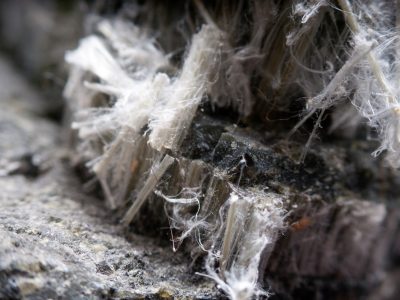
Asbestos is a natural fiber which was widely used as a construction material – including vinyl asbestos floor tiles and mastics – during the 1950s, 60s and 70s. Inhalation of asbestos fibers can cause malignant mesothelioma, a cancer of the lining of the lungs as well as lung cancer and asbestosis.

NIOSH Taking Comments on Asbestos Bulletin

February 24th, 2010

Asbestos remains an environmental hazard in 2009.  Just how many U.S. workers are still exposed to asbestos fibers on the job is unknown, but OSHA estimated in 2008 that 1.3 million workers in construction and general industry may still face significant exposures. NIOSH now has released a revised current intelligence bulletin (the full bulletin is located at www.cdc.gov/niosh/review/public/099-C/pdfs/AsbestosRoadmapPublicDraftV4a.pdf  ) for asbestos fibers in which the agency explains what it still wants to research and clarifies the 1990 NIOSH recommended exposure limit (REL) for airborne asbestos fibers.
That REL, 0.1 airborne asbestos fibers per cubic centimeter, has created confusion over which materials included in the NIOSH definition are “asbestos” and whether the definition is optimal for protecting workers’ health. The revised document, for which NIOSH seeks comments by April 16, clarifies but does not change the exposure limit. The REL now is “0.1 countable elongate mineral particles from one or more covered minerals per cubic centimeter averaged over 100 minutes where:

• A countable elongate mineral particle (EMP) is an fiber or fragment of a mineral longer than 5 um with a minimum aspect ratio of 3:1 when viewed microscopically using NIOSH Analytical Method #7400(‘A’ rules) or its equivalent; and
• A covered material is any mineral having the crystal structure and elemental composition of: one of the asbestos varieties (chrysotile, riebeckite asbestos [crocidolite], cummingtonite-grunerite asbestos [amosite], anthophyllite asbestos, tremolite asbestos, and actinolite asbestos) or one of their nonasbestiform analogs (the serpentine minerals antigorite and lizardite, and the amphibole minerals contained in the cummingtonite-grunerite mineral series, the tremolite-ferroactinolite mineral series, and the glaucophane-riebeckite mineral series.)”

The NIOSH draft indicates U.S. imports of asbestos have dropped  from 35,000 metric tons in 1991 to under 3,000 metric tons in 2006 and 2007, with domestic production having ceased in 2003.  However, worldwide use stood at 2 million metric tons as recently as 2006, mainly for use in building materials, according to the draft.

Approximately 3,000 individuals are diagnosed annually in the US with mesothelioma, a cancer of the lining of the lung caused by asbestos exposure.  Still others continue to be diagnosed with other asbestos-related diseases such as lung cancer and asbestosis. Because of the long latency period between exposure and related disease, asbestos related deaths in the United States “are anticipated to occur for several decades,” according to the draft.

Asbestos Drilling Mud Additives Still a Health Risk

February 23rd, 2010

Individuals who worked on drilling rigs from the 1960s through the 1980s likely were exposed to asbestos from additives used as part of the drilling mud system. During these years, oilfield workers such as roughnecks, roustabouts, derrickmen, mudmen and others often worked with drilling muds and various drilling mud additives that were used in the mud circulation system. The mud circulation system worked throughout the drilling process to help lift and remove cuttings and debris from the wellbore as well as to help cool down the drill bit. The drilling mud system typically included a series of large mud pumps, a mud or mixing hopper, shale shaker, and reserve pit. The drilling muds and additives flowed through the drill pipe and out of the drill bit. Fluid pressure from the mud pumps would then circulate the drilling mud back out of the well bore and back through again.

Asbestos drilling mud additives were used throughout the drilling industry in Texas, New Mexico, Oklahoma, Louisiana, North and South Dakota, and in many other locations across the United States as well as on off-shore rigs during the 60s, 70s and 80s. Some of the formations across the US and the world where these materials were used include: Midland Basin, Williston Basin, Andarko Basin, North Slope, North Sea, Wilcox trends and numerous off-shore drilling locations.

Inhalation of asbestos fibers can cause malignant mesothelioma, a cancer of the lining of the lung, as well as lung cancer. “Countless oilfield workers were exposed to this deadly fiber,” says Texas mesothelioma attorney Ben DuBose “and unfortunately, many of those workers are now beginning to be diagnosed with asbestos related cancers.”

India’s 21st Century Asbestos Epidemic

February 19th, 2010

India’s continuing reliance on asbestos construction products and its lack of environmental regulations will result in an explosion of malignant asbestos-related diseases including mesothelioma and lung cancer, warn experts in this month’s issue of The Lancet, a leading medical journal.  

Asbestos  is a natural mineral which causes a variety of cancers including mesothelioma and lung cancer.  “Sadly, this is a human tragedy which is entirely preventable,” says mesothelioma lawyer Ben DuBose of Dallas, Texas.   “The government of India knows that asbestos is a deadly substance – a fact known by the world’s medical and scientific community for decades.  What makes the situation in India deplorable is that the government of India would knowingly unleash this epidemic on its own citizens in 2010” says DuBose.  

Asbestos disease, generally thought to be a problem of the past, will continue to be a human tragedy of the 21st Century thanks  not only to weak environmental policies in the developing world but also because of the gross indifference of Canada – currently the world’s largest exporter of chrysotile asbestos.   

The government owned asbestos mine in Quebec Canada exported over $90 million dollars worth of Chrysotile asbestos in 2009 to developing countries such as India and Mexico.   The Chrysotile Institute, an influential organization funded by the Canadian government, lobbies internationally on behalf of chrysotile as a “safe” asbestos fiber.  Indeed, Canada has been instrumental in trying to stop international agreements to abolish exportation of the fiber. 

In the United States, the EPA long ago declared that all fiber types, including chrysotile, cause cancer in humans.  Asbestos, including chrysotile, was the first substance regulated by OSHA in 1972.  Moreover, the World Health Organization has declared that chrysotile and all asbestos fiber types cause cancer in humans even at low levels of exposure.  This global consensus that asbestos is a lethal substance has prompted more than 40 countries – including all member states of the European Union – to ban chrysotile asbestos. 

Tragically, the governments of many developing countries have not enacted measures to protect their citizens from the hazards of asbestos.   In India, for example, there’s a very low awareness of the health hazards of asbestos.  As one expert, Arthur Frank of Drexel University, told The Lancet, “We can expect a lot more death and disease, that’s no secret.  There’s no champion for the working person, or for the elimination or reduction in the use of asbestos, that I can see in the central Indian Government.”